The Sacred Liturgy

Liturgy

Rediscovering the beauty, meaning, and sanctity of God’s presence in the Church’s worship.

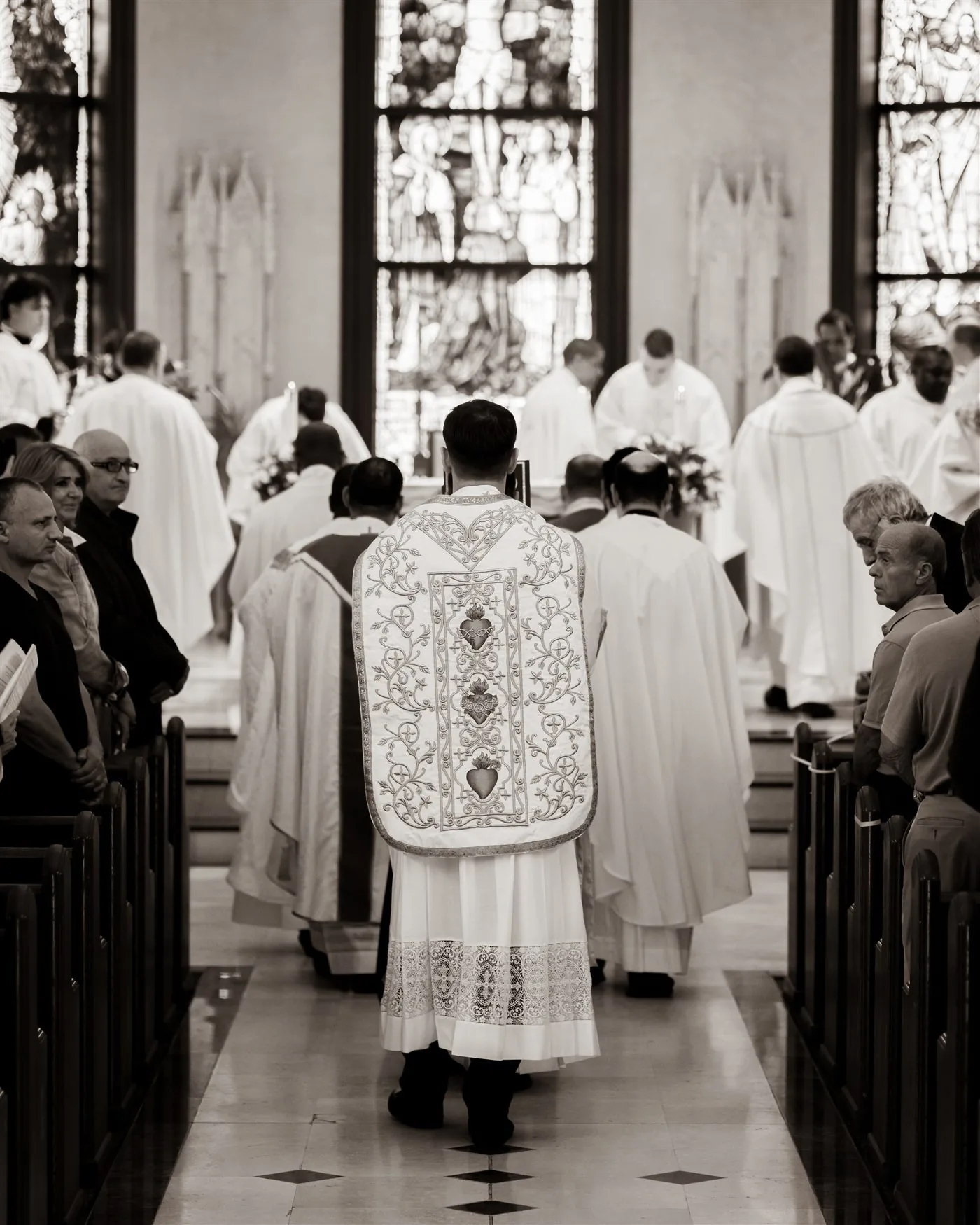
Priest walking in a liturgical procession through a church
Encounter with Christ

The enduring power of the sacred.

Throughout his life, Pope Benedict XVI was devoted to the liturgy; an encounter with the living God, which has the power to ‘unite parish communities and be loved by them’ when ‘celebrated with great reverence in harmony with the liturgical directives.’ It was his desire to foster a new liturgical movement – a movement towards the liturgy which would inspire a new reverence for the liturgical rites, and a fresh understanding of their rich theological depth. Pope Benedict XVI promoted the rediscovery of the beauty of the Church’s tradition.

‘What earlier generations held as sacred, remains sacred and great for us too.’
— Pope Benedict XVI, Summorum Pontificum, 2007

For this reason we seek to rediscover the beauty, meaning, and sanctity of God’s presence in the Sacred Liturgy, the privileged place of encounter with Christ and participation in the mysteries of salvation.

Understanding the Mystery

Liturgical Formation

Authentic participation presupposes understanding. This section offers resources to help clergy and the faithful enter more deeply into the mystery of the liturgy.

‘The Liturgy is not the memory of past events, but is the living presence of the Paschal Mystery of Christ who transcends and unites times and places.’
— Pope Benedict XVI, General Audience, 3 October 2012
Explore Liturgical Formation

At the centre of all liturgical renewal is sound liturgical formation – understanding what is being celebrated in order that it might be celebrated worthily and well. Liturgical formation is not only for the clergy – it is for the whole Christian faithful, to form a deep personal familiarity with the liturgy. This section offers resources to help the clergy and the lay faithful to enter more deeply into the mystery of the Church’s sacred liturgy.

01

Understanding the Holy Eucharist

The Eucharistic celebration, as the encounter with the living Christ par excellence, is the source and summit of the entire Christian Life (Lumen Gentium, 11). This Sacrament of unity is, as St Augustine said, the mystery by which the Christian faithful see what they are already and receive what they are to become – the very body of Christ. This understanding was the golden thread through running through Pope Benedict XVI’s life and priestly ministry, and through all his liturgical writings. Our mission to promote this understanding begins with the rediscovery and promotion of his writings and the works inspired by them, and further formation on the nature of the Eucharistic sacrifice.

Bibliography · to be expanded

  • Joseph Ratzinger, Collected Works – Theology of the Liturgy
  • Joseph Ratzinger, The Feast of Faith: Approaches to a Theology of the Liturgy
  • Pope Benedict XVI, Behold the Lamb of God
02

Devout Participation

The fully conscious and active participation of the lay faithful ‘is the primary and indispensable source from which the faithful are to derive the true Christian spirit’ (Sacrosanctum Concilium, 14). However, there is a danger that active participation becomes something superficial – limited to outward gestures and words, without touching on the interior participation in the sacred liturgy. We provide resources for the lay faithful to participate devoutly in the sacred liturgy, praying with the Priest and the whole Church and joining themselves to the sacrificial action celebrated at the altar.

03

Parish and Family Formation: Liturgical Catechesis

The family and the Parish community are the centre of liturgical formation. Pope Benedict XVI wrote of his own accompaniment by his parents and pastor throughout his childhood ‘a riveting adventure to move by degrees into the mysterious world of the liturgy, which was being enacted before us and for us there on the altar.’ We provide materials for parishes and families to grow together in a deeper understanding and love of the liturgy.

Understanding the Holy Eucharist

“Source and summit of the Christian life” — exploring its theological nature and sacramental dimension.

Devout Participation

Understanding participation in order to enter more deeply into the divine mystery.

Parish and Family Formation

Resources for communities, families, and study groups.

Liturgical Catechesis

Formation materials rooted in the Church’s liturgical tradition.

The Art of Celebrating

Ars Celebrandi

The art of celebrating the sacred liturgy must be learned. This section offers practical resources that foster reverence, clarity, and fidelity in the celebration of the sacred mysteries.

‘The most sure guarantee that the Missal of Paul VI can unite parish communities and be loved by them consists in its being celebrated with great reverence in harmony with the liturgical directives. This will bring out the spiritual richness and the theological depth of this Missal.’
— Pope Benedict XVI, Summorum Pontificum, 2007
Explore Ars Celebrandi

The Ars Celebrandi (the ‘art of celebrating’) rooted in the tradition and liturgical theology of the Church must be learned, studied, and promoted. This section offers practical resources that foster reverence, clarity, and fidelity in the celebration of the sacred mysteries.

01

Clergy Formation

Learning to celebrate the liturgy well is a duty for priests, deacons, and seminarians – that they will come to the altar with a spirit of reverence, and that they will be prepared to celebrate the liturgy worthily.

Resources

  • Peter Elliott, Ceremonies of the Modern Roman Rite (Ignatius, 2004)
  • Peter Elliott, Ceremonies of the Liturgical Year (Ignatius, 2002)
  • Uwe Michael Lang, Turning towards the Lord: Orientation in Liturgical Prayer (Ignatius, 2005)
  • Latin Mass University
02

Ceremonial Practice and Server Formation

The Altar Servers and Masters of Ceremonies play a crucial role in the liturgy – adding dignity and solemnity to the celebrations. They too require careful training and instruction.

Resources

The Church’s Prayer

Sacred Music

Pope Benedict XVI consistently emphasized that sacred music is not an addition to the liturgy, but an expression of the Church’s prayer. This section explores the musical heritage of the Church and supports its continued cultivation as a privileged means of participating in the sacred mystery.

‘Indelibly impressed in my memory, for instance, is how, when the first notes of Mozart's Coronation Mass sounded, Heaven virtually opened and the presence of the Lord was experienced very profoundly.’
— Pope Benedict XVI, Castel Gandolfo, 4 July 2015
Explore Sacred Music
01

Gregorian Chant

Pope St Pius X, in the letter Tra Le Sollecitudini (1903) called Gregorian chant the supreme model for the Church’s liturgical music – the closer a piece of music is to Gregorian chant, the more sacred and liturgical it becomes. To ‘sing the Mass’ properly speaking means to sing those chants which belong to the proper of the Mass. For this reason the Second Vatican Council ordered that Gregorian chant should be given pride of place in liturgical services (Sacrosanctum Concilium, 116) and called for a renewal of the Gregorian chant books and the production of a book of simpler chant melodies for smaller churches, in accord with the wishes of St Pius X that ‘Special efforts are to be made to restore the use of the Gregorian Chant by the people, so that the faithful may again take a more active part’. Here you will find resources for choirs and singers to learn and make use of Gregorian Chant.

02

Sacred Polyphony

Closely allied to Gregorian chant is Sacred Polyphony, in which the texts of the Mass and Sacred Scripture, and the prayers of the saints, are sung in harmony – with several distinct vocal lines coming together into a cohesive whole. The great masters of the renaissance and the counter reformation pioneered this style of music, which endures and continues to be written today. St Pius X, and the Second Vatcian Council list polyphony alongside Gregorian chant, as music most fitting for the liturgy.

03

Choir Formation

Bringing the treasures of Gregorian Chant and Sacred Polyphony back into use in parishes and Catholic communities takes time and dedication, not least from choirs and their directors. Here we will share training courses and materials for choirs and choir directors.

04

Schools and Youth

If Gregorian Chant, Sacred Polyphony, and traditional hymnody is to take root in the Liturgy again, special effort must be taken to communicate it to children and young adults – especially in Catholic Schools. Successive Popes have urged pastors to form a Schola Cantorum (school of singing) in parishes, schools and seminaries, so that the young might learn and love Church music. Here you will find resources to help those wanting to begin teaching chant and sacred music to children.

The Church’s Common Life

Living the Liturgical Year

The liturgy extends beyond the celebration of the Holy Eucharist and unfolds throughout the liturgical year. This section explores the practices, traditions, and forms of prayer that shape the Church’s common life.

‘The Church year gave the time its rhythm, and I experienced that with great gratitude and joy already as a child, indeed, above all as a child.’
— Joseph Ratzinger, Milestones
Explore the Liturgical Year

The Sacred Liturgy extends beyond the celebration of the Mass, and unfolds throughout the whole Liturgical Year. In his memoir, Milestones, then-Cardinal Ratzinger related the many ways in which his childhood religion was inspired by the rich symbolism of the liturgies and para-liturgical elements built in to the Church’s year – the pitch-blackness of the Church when the Mass of Angels (Rorate Mass) was celebrated by candlelight during Advent, the steady growth of the family’s nativity scene, and the intense joy during Holy Saturday when the words ‘Christ is risen’ gave the signal for the curtains to be flung open to flood the Church with sunlight. The Church’s common life is enriched when the faithful are encouraged to live the liturgy in their daily lives and throughout the year.

01

The Liturgical Year

Part of living the liturgical year is learning to follow the seasons and feasts, and to allow our Churches, our homes, the way we dress, and even the way we eat, to be influenced by them. This can be as simple as reading the Roman Martyrology to learn from the saints of the day, or as intricate as setting up a room or a special corner of the home for prayer and decorating it according to the season.

02

The Divine Office and Benediction

The Divine Office (or Liturgy of the Hours) is prayed by priests and religious every day, several times a day. It is the ‘prayer of the whole Church’ – praying the psalms and the canticles of the bible in the morning, during the day, and at night. The purpose of the Divine Office is to offer prayers for the Church and the World, and to sanctify the whole day through prayer. The lay faithful have often joined in with this prayer, especially with the major hours of Lauds (Morning Prayer) and Vespers (Evening Prayer). Often, the Office of Vespers was joined to Benediction of the Blessed Sacrament – a short period where the Blessed Sacrament was exposed in the Monstrance and a blessing imparted over the people. Below are resources to help lay people pray the office, and to help parishes celebrate Vespers and Benediction.

03

Processions and Pilgrimages

Throughout the year, the Church suggests that the Faithful walk to or from the Church in procession, as a public witness to the Faith. The major processions, still taking place in many countries, are on Palm Sunday of the Passion (the Sunday before Easter Sunday) and Corpus Christi (a few weeks after Easter). Processions have also traditionally been held on the Feast of the Exaltation of the Cross (14 September) on Good Friday, and on the 25 April (the Major Rogation day).

Pilgrimages to Holy Places are another way of making a public witness to the Faith, and undertaking a penance – by walking to a particular holy site, praying and celebrating the Mass and the Divine Office along the route. The most popular pilgrimage routes today are the Camino to Santiago de Compostela, the Via Francigena between Canterbury and Rome, the Pilgrims Way between Winchester and Canterbury, and the Way of St Francis between Rome and Assisi. There are many other pilgrimage routes to walk.

Procession Resources

  • Resources coming soon.

Pilgrimage Resources

04

Sacramentals and Blessings

The Sacramentals are sacred signs, objects, or actions given by the Church which dispose those who receive them to receive the Grace of the Sacraments, and help them to sanctify their daily lives. When objects and places are blessed by a Priest, through the prayer of the Church, they are sanctified and protected from the influence of the evil one. Houses, cars, schools, holy objects, foods, candles, and many other things may be blessed by a priest. The following resources are to help priests and the lay faithful to avail themselves of these precious gifts from the Church.

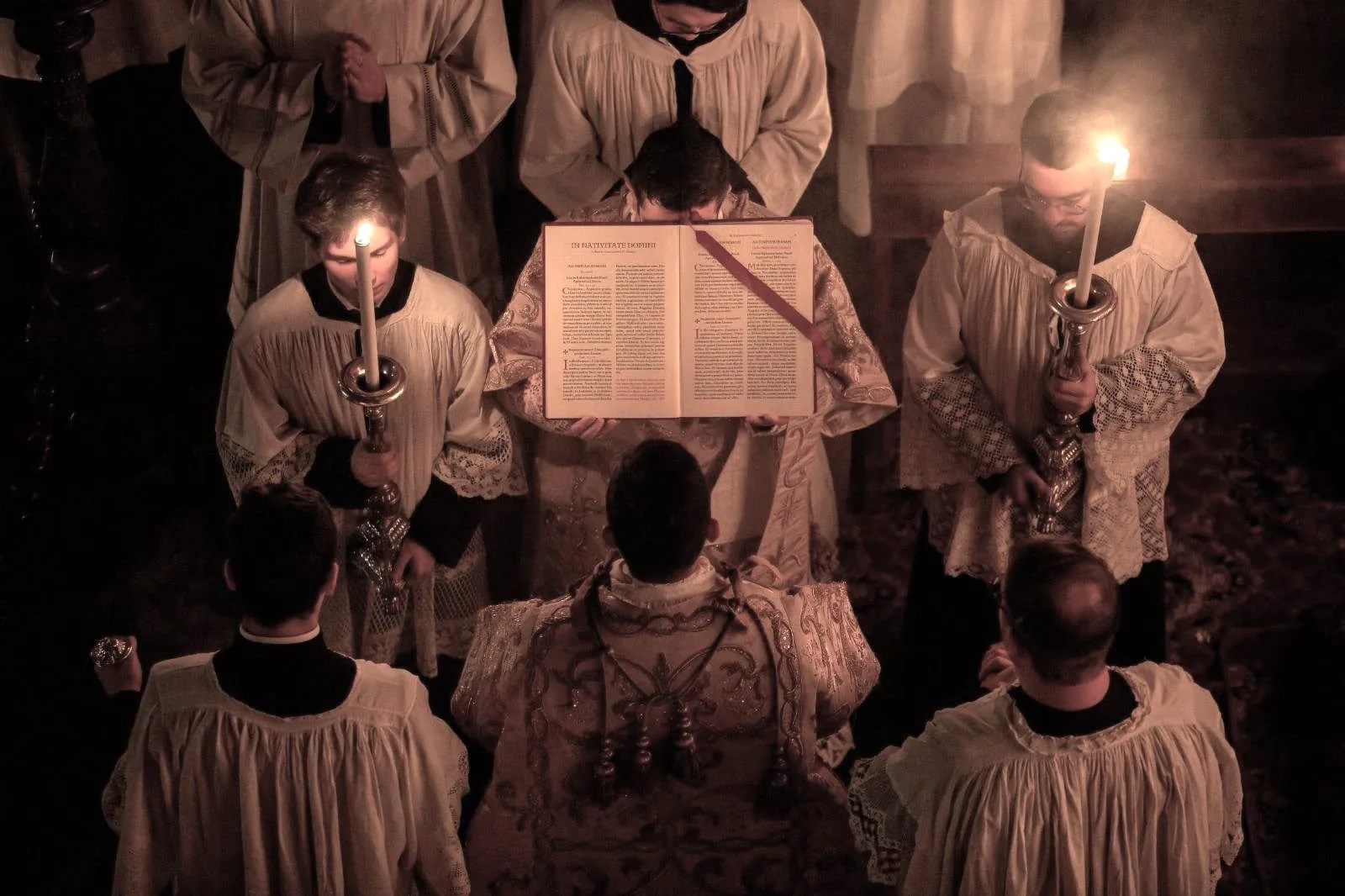
Clergy gathered around an illuminated liturgical book during worship
Liturgical Formation

Deepen Your Understanding of the Liturgy

Stay connected with the Benedict XVI Society and receive updates on liturgical resources, publications, events, and initiatives from across the Society.

Stay Connected